
Mercy University Social Work Programs
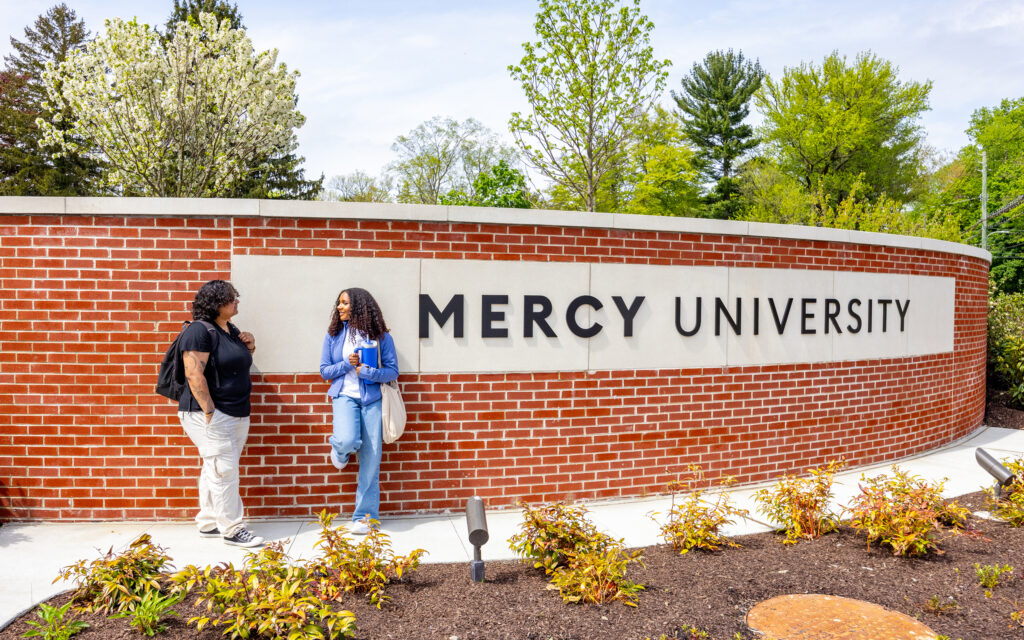
Social Work calls to people who truly want to make lives better and tackle society’s pressing needs. Mercy University’s Social Work Program will help you become a skilled generalist practitioner who can serve people from all backgrounds, especially those at risk. You’ll gain the knowledge and skills to direct your way through professional, societal, and ethical challenges in today’s social work practice.
Mercy’s program builds on social justice and human dignity principles to enhance quality of life and tackle adverse conditions. Our future professionals learn to act with integrity and compassion. The program places anti-racist practices, diversity, equity, and inclusion at the heart of social work.
Your Mercy social work education prepares you to counsel individuals and families. You’ll help people get needed resources and develop community programs. The skills you learn will help address issues like child abuse, mental illness, poverty, disability, substance abuse, discrimination, family conflict, and aging.
Social workers enjoy excellent job prospects. The U.S. Department of Labor’s Bureau of Statistics projects a 22% increase in employment over the next decade—substantially faster than average across all occupations.
Mercy University’s Bachelor of Social Work (BSW) program has earned full accreditation from the Council for Social Work Education (CSWE). This career-focused program offers extensive fieldwork opportunities and faculty mentorship. Students can finish the 120-credit degree program in four years of full-time study.
Our graduates work successfully in mental health clinics, schools, hospitals, substance abuse programs, nursing homes, family services, criminal justice, college counseling, and employee assistance programs. The program also gives you solid academic and practical foundations that prepare you well for graduate studies.
Social work programs offered at Mercy
Mercy University helps you build a rewarding career in social work through several educational paths. The Bachelor of Social Work (BSW) program serves as the life-blood of these offerings and provides an excellent starting point for aspiring social workers. Students gain a solid foundation in social work practice that emphasizes critical thinking and ethical decision-making skills.
Students seeking advanced opportunities can pursue Mercy’s Master of Social Work (MSW) program. This program helps you specialize further and prepares you for clinical licensure and advanced practice roles. Mercy’s approach to social work education fits your professional goals, whether you’re just starting out or advancing your existing career.
Mercy University’s social work programs stand out in New York because of their practical, hands-on learning approach. Students apply theoretical knowledge in real-life settings under professional supervision through extensive fieldwork components. Field placements happen in a variety of settings throughout the New York metropolitan area. These placements are a great way to get experience with different populations and social issues.
The curriculum follows a progressive model that starts with foundational courses in human behavior, social welfare policy, and research methods. Advanced students focus on clinical assessment, intervention strategies, and advanced practice techniques. Small class sizes help create meaningful interactions between faculty and students.
Faculty members bring their extensive practice experience to the classroom. Many maintain active clinical practices while teaching. This keeps the learning material relevant to today’s social work environment.
The social work programs at Mercy emphasize cultural competence and social justice. These prepare you to work with diverse populations effectively. Graduates leave with theoretical knowledge and practical skills they can use immediately in professional settings.
Online program options
Mercy University’s online social work education options put flexibility first. The university understands the challenges working professionals face and has designed a digital learning experience that works with busy schedules while delivering quality education.
Students find convenience built into these online programs. The courses run in a fully online format with 8-week terms. You can take two classes at a time while working full-time. This focused format creates an intensive yet doable academic experience that helps you finish faster without disrupting your work life.
Mercy’s unique strength lies in its work-based learning approach. Every course connects theory to ground applications. Your education stays practical and relevant to your career growth. Theory and practice come together to create an integrated learning experience that surpasses traditional online education.
The university offers different online course formats to match various learning priorities. Students can choose from regular asynchronous online classes with flexible timing, “Online Synched” sessions with scheduled live meetings, or “Online Hybrid” courses that blend structured sessions with independent work. These options let you pick a format that lines up with how you learn best and fits your schedule.
The university’s dedication to flexibility goes beyond course design. Students can access optional in-person advising, coaching, and networking at all three Mercy campuses. This mix gives you the best of both worlds – digital ease and personal connections.
These online programs uphold the same academic standards as campus-based ones. They deliver similar quality, outcomes, value, recognition, and accreditation as traditional degree programs. Employers value your online Mercy degree just as much as one earned through traditional study.
Admissions
Students can join Mercy University’s Social Work Program through a well-laid-out application process at the end of their sophomore year. The program expects freshmen and sophomores to declare pre-social work as their major before they submit their formal application.
The program admission requirements include:
- Complete at least 45 credits
- Achieve a minimum 2.60 cumulative GPA (on a 4.0 scale)
- Show potential to help others
- Display clear oral and written communication skills
- Demonstrate conceptual and analytical thinking skills
The Social Work Program Director meets with each applicant personally after submission. This meeting helps discuss your interests, experience, skills, and goals. The director explains program requirements and the time commitment needed during the senior-year field practicum.
The Program Admissions Committee evaluates your complete application and presentation carefully. You will receive a formal letter showing whether you gained admission, received provisional admission with specific requirements, or faced denial.
Transfer students should reach out to the Social Work Program about application materials while applying to the university. Most students begin their program journey at the start of junior year after acceptance.
Tuition
Mercy University stands out with its affordable social work education programs. Students pay $23,650 in annual tuition and registration fees, which is significantly lower than the national average of $46,950. The university ranks among the most affordable institutions, sitting in the bottom 15% nationwide.
Students who enroll full-time (12+ credits) pay $11,375 each term. Part-time students pay $957 per credit. The registration fees are $450 per term for full-time students and $225 for part-time students.
A student’s total annual cost reaches $35,460, broken down as follows:
- Tuition and fees: $22,880
- Housing and meals: $6,840
- Books and supplies: $1,690
- Transportation: $1,820
- Other expenses: $2,230
Campus housing costs $10,850 yearly, placing it in the top 25% nationally. The meal plans average $4,750, ranking in the bottom 20% for affordability.
Financial aid makes these costs more manageable. Merit scholarships are available automatically to all new students. Federal loan recipients pay an average net price of $14,940, with actual costs varying based on family income.
Mercy delivers quality private education at an accessible price point, staying true to its core mission.
Other information
Mercy University’s Social Work Program stands out with features that boost your learning experience. Students connect with community agencies through a practical training model. The program builds strong partnerships to create and supervise quality educational experiences through open communication and shared learning principles.
The university has created a specialized Human Services program that works well for professionals and transfer students who have experience in community safety, recovery, or aging-related fields. Students with 60-90 credits can complete this program in 12-24 months while keeping their full-time jobs. The program replaces traditional internships with a capstone project that tackles real-life challenges in your field.
The career success of Mercy graduates speaks volumes. The university ranks among the top 5% nationwide for exceeding expected earnings. Graduates make $22,055 more than predicted based on student demographics.
The White House has recognized Mercy as a national leader in community service and added it to the President’s Higher Education Community Service Honor Roll. The university’s excellence shows in other ways too – Westchester Magazine named it the Best College in 2019, 2020, and 2022.