
Marist University Social Work Programs
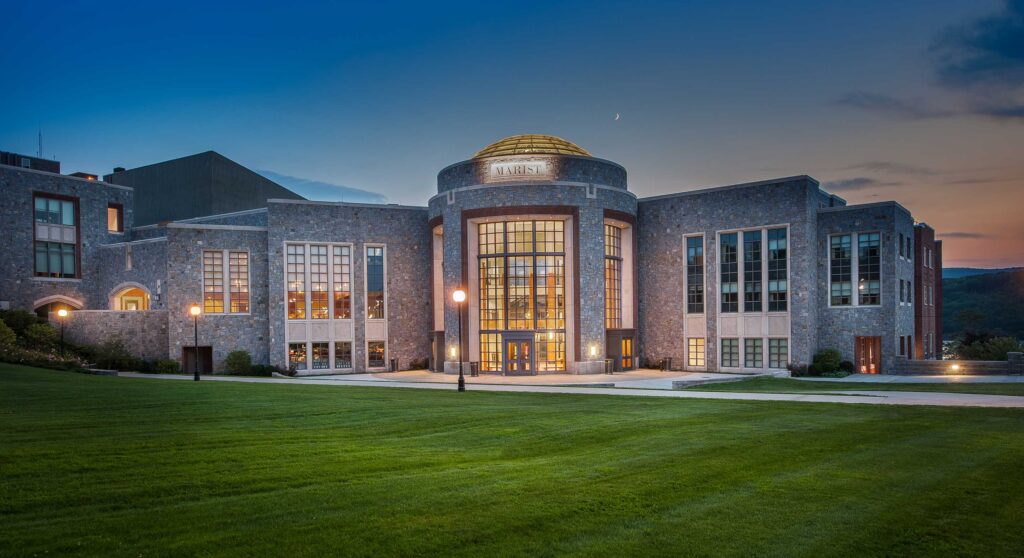
Marist University sits on the beautiful banks of the Hudson River in Poughkeepsie, New York. This premier institution focuses on educational excellence and professional development. Strong liberal arts principles have shaped this 240-year-old institution that prepares students for meaningful careers while emphasizing social responsibility.
The university blends traditional academic rigor with innovative teaching methods effectively. Students enjoy a serene yet stimulating environment across 240 acres of stunning riverfront property. Marist’s reach extends globally through its Italian branch campus in Florence and numerous study abroad programs.
High rankings among regional universities showcase Marist’s excellence in education. Students gain innovative technology skills needed in today’s digital world, which proves especially valuable when working with digital tools for case management and service delivery in social work.
Marist’s educational philosophy centers on creating well-rounded professionals who combine theory with practical skills. Social work students benefit greatly from this approach as they learn to direct complex human situations while implementing evidence-based practices.
Experienced faculty members bring their field expertise to classrooms, keeping lessons relevant and practical. Small classes allow for individual attention and mentorship, creating perfect conditions to develop the interpersonal skills that social work demands.
The university collaborates with community organizations and service agencies throughout the Hudson Valley region. These partnerships give students valuable networking opportunities and hands-on experience. Social work students particularly benefit as they involve themselves with various populations and face ground challenges during their education.
Marist University gives social work students a supportive community. Here, academic excellence and professional preparation merge with service values and ethical practice—key foundations to build a successful social work career.
Social work programs offered
Marist University shapes compassionate social work professionals through its detailed education programs at both undergraduate and graduate levels. Students learn to create meaningful changes in their communities.
The Bachelor of Science in Social Work (BSW) program earned accreditation by the Council on Social Work Education (CSWE) since 1981. Students learn generalist social work practice through coursework that covers social work values, ethics, diversity, social justice, human behavior, policy, research, and field education. The program requires 62 credits in sociology and social work courses. Students must complete 12 additional credits in related subjects like psychology, economics, political science, and biology. Senior students gain hands-on experience through 450 hours at internship sites to apply their classroom knowledge in real-life settings.
The Master of Social Work (MSW) program specializes in trauma-informed care and evidence-based practices. Students can choose from two online paths:
- Two-Year Degree: Students complete 64 credits with 1,100 hours of clinical internship training. The schedule requires two days per week during the first year and three days during the second
- Advanced Standing: BSW graduates from CSWE-accredited programs with a 3.0 GPA can take this accelerated path. It requires 32 credits and 650 hours of clinical internship over three days per week
The MSW program’s candidacy for CSWE’s Board of Accreditation suggests steady progress toward meeting quality standards. The practicum office helps students find placements in various settings such as child welfare, criminal justice, family counseling, hospitals, nursing facilities, schools, and substance misuse programs.
Both programs champion anti-racism, diversity, equity, and inclusion. MSW graduates learn to eliminate systemic oppression, promote cultural humility, and enhance quality of life for everyone.
The job market looks promising for program graduates. The Bureau of Labor Statistics projects social worker employment to grow by eleven percent over the next decade, much faster than average. New York State ranks second nationwide for employment of child, family, and school social workers.
Online program options
Marist University has expanded its digital education platforms, but available options depend on your degree level. The university does not offer an online Bachelor of Social Work degree program. Students seeking advanced credentials can enroll in a reliable 100% online Master of Social Work (MSW) program.
The online MSW program focuses on trauma-informed care and evidence-based practices. Students and faculty interact smoothly through Marist’s learning management system, Brightspace. The program runs mostly asynchronously, but students must attend weekly 1.25-hour Practicum Seminar courses via Zoom in the afternoon or evening.
Students work on group projects, assignments, and independent coursework in the online MSW program. Two program tracks are available:
- Two-Year Degree: Students complete 64 credits and 1,100 hours of clinical internship training, with cohorts starting in June
- Advanced Standing: Students with a BSW from a CSWE-accredited program and a minimum 3.0 GPA need 32 credits and 650 hours of clinical internship, starting in June
The online MSW program meets Council on Social Work Education (CSWE) accreditation standards and licensing requirements in most U.S. states and territories. Students start with an online orientation that introduces the program and helps them connect with classmates and instructors.
Marist’s flexible learning options include asynchronous 4-week and 8-week online courses. Students can choose hybrid options that blend on-campus and online components, or create custom schedules that fit their needs.
Admissions
Marist University’s social work programs offer a clear path to admission that looks at both academic excellence and dedication to the field. The MSW program accepts applications on a rolling basis, which means the review starts as soon as you complete your application.
Undergraduate students can apply by February 15 for both Early Decision II and Regular Decision. The MSW program’s priority deadline stands at April 15. The program maintains high standards with a selective admissions process – recent data shows they accept about 56 students out of every 100 applicants.
The MSW program’s requirements include:
- Letters of recommendation
- Minimum undergraduate GPA of 3.0
- Personal interview
Good news for applicants – the MSW program doesn’t require GRE scores. International students need to submit either TOEFL scores (minimum 550 paper/80 IBT) or IELTS scores (recommended 6.5).
The admission team works quickly. You’ll know their decision within a week after your interview. They send an official email and make a personal call from Marist Graduate Admission.
The university welcomes transfer students and reviews previous graduate coursework carefully. Students can transfer up to nine credits from other accredited MSW programs, which could save both time and money.
Tuition
Marist University’s social work programs blend quality education with affordable options for students at all levels. The 2025-26 undergraduate tuition is $48,800, and residential students can expect total costs of $73,985. Students who commute from home pay less at $61,035, which helps make the program budget-friendly.
MSW degree students pay $990 per credit. Full-time enrollment at 12 credits per semester comes to $23,760 in tuition. A detailed cost breakdown for full-time graduate students shows $49,805 total, which includes housing, meals and other expenses.
Students get substantial financial support at Marist. The university gives out over $91 million in financial aid each year, and 92% of students receive some type of aid. Merit scholarships help reduce costs by $10,000 to $30,000 yearly.
Marist makes paying for education simple. Students can use electronic billing, ACH transfers, cash, checks, or credit cards. Billing works on a semester system. Fall statements come out mid-July with August payment due dates. Spring statements arrive mid-December, and payments are due in January.
The university’s focus on student success shows in the numbers. Marist students have a 98% loan repayment rate, beating other private schools’ 93% average.
Other information
Marist University helps social work students build their careers through complete career development support. The Career Services team offers key resources like FOCUS 2 (a computer-assisted guidance program), personal career assessments, and access to the Marist Alumni Career Network.
The job market looks great for graduates. 99% of School of Social and Behavioral Sciences graduates find jobs or enter graduate school within six months after graduation. The Bureau of Labor Statistics expects social work jobs to grow 11% in the next decade. This is a big deal as it means that the growth rate is much faster than the national average.
Students learn from experts who know the field inside out. Each faculty member is either a former or practicing social worker. Small class sizes and faculty’s real-life experience create strong mentoring bonds between professors and students.
Students at Marist get unique research opportunities that set them apart. They work on research projects with local non-profits, which helps them learn while making a real difference in the community.
The program puts service-learning at its core. Students work on community projects to address social issues. Recent projects focused on mental health awareness, LGBTQ+ equity, sexual assault awareness, and environmental advocacy. Through these experiences, Marist graduates become champions of anti-racism, diversity, and social justice, working to improve everyone’s quality of life.