
Hunter College MSW vs Fordham University MSW
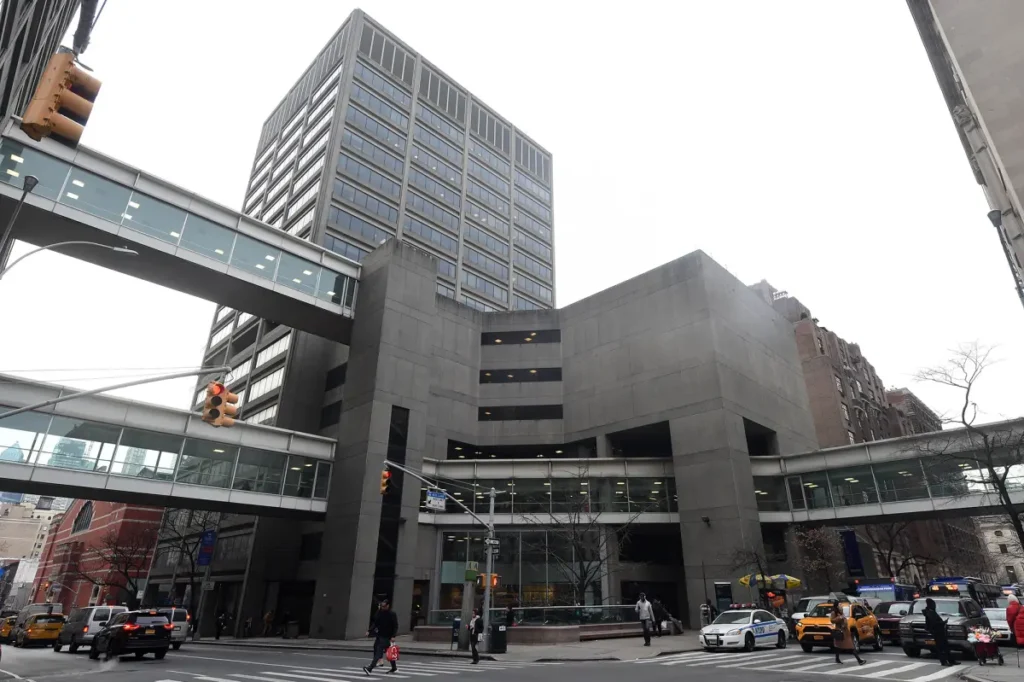
If you are choosing between Hunter MSW and Fordham MSW programs, then you are making an important choice.
Both schools have separate aspects that appeal to different student needs and career goals. Hunter’s program stands out as a public institution with substantially lower tuition at $6,782 compared to Fordham’s $47,317. The Fordham University MSW program ranks in the top 8% nationally and offers specialized practice certificates. Hunter is part of the CUNY system, and does not have the same ranking, but according to all reports, is still a great choice where you will get similar access to field placement and clinical sites.
We take a look at each program and the factors that make each one great.
Note: Our program comparison comes out of our experience as admissions counselors.
Program Structure: Hunter Social Work Masters vs Fordham University MSW Program
Traditional MSW Program Tracks
Both programs require credit loads that are alike but differ in structure. Hunter’s social work masters operates as a 60-credit program. Fordham University’s MSW requires 62 credits total. Hunter has you attend classes two days weekly while completing field placement two additional days. The standard track spans five semesters plus two intervening summers.
Fordham splits its program in a different way. You complete 48 credits of classwork and 14 credits of fieldwork over two academic years. Field placements run between 15 and 21 hours per week, with a total requirement of 950 hours. This breaks down to 450 hours during the Foundation/Generalist phase. The Advanced/Specialist phase requires 500 hours.
Hunter also offers accelerated options to students ready for intensive study. The Accelerated Full-Time Program compresses the same 60 credits into five semesters without summer breaks. The One-Year Residency Program serves working social service professionals and requires two years of full-time employment experience before admission.
Advanced Standing Options for BSW Graduates
Students with recent BSW degrees face different pathways at each school. Hunter accepts applicants who earned their BSW within five years prior to application and awards credit for the entire first year. You complete just 36 credits across three semesters.
Fordham’s advanced standing program can move even faster. Full-time students finish in as few as nine months and save over $30,000 in the process. Part-time advanced standing students need two academic years to complete. Advanced standing students at Fordham complete only one field education internship totaling 500 hours. Traditional students must complete the full 950-hour requirement.
Online and Hybrid Format Availability
Hunter offers four distinct course formats. Traditional courses meet weekly for three hours in-person. Hybrid courses conduct roughly one-third of instruction (about 15 hours) online with two-hour weekly classroom sessions. Super-hybrid courses meet only 2-3 times per semester in person. Courses that are online conduct all work through Brightspace.
Fordham provides three program modalities: on-campus at Lincoln Center and Westchester, a Molloy hybrid option, and one that is online. The Molloy hybrid combines face-to-face classes at Molloy’s Long Island campus with online courses.
Part-Time vs Full-Time Study Paths
The most important difference emerges here. Hunter does not offer part-time study options. Your choices limit to full-time enrollment or the OYR work-study program.
Fordham accommodates various schedules. Part-time students complete their degree in three to four years. They begin with two classes per semester and add fieldwork in year two. Fordham’s flexibility extends to weekend and evening classes. Full-time students can complete coursework in just one day weekly on campus.
Tuition and Total Program Costs
Hunter CUNY Public School Pricing
Cost becomes a deciding factor between Hunter MSW and Fordham MSW NY programs. Hunter operates on a public university fee structure with major differences for residents. New York State residents pay $11,090 per year for full-time graduate study or $470 per credit for part-time enrollment. Out-of-state students face higher rates at $25,650 a year or $855 per credit.
Mandatory fees add to your bill each semester. Fall and spring terms include $153.45 in combined technology, activity and senate fees. Summer sessions carry reduced fees of $77.50. The total two-year MSW cost at Hunter reaches $27,128 for full-time students.
Fordham University Private School Tuition
Fordham university msw program charges $1,098 per credit for the 2025-2026 academic year. Traditional students complete 31 credits per year. Your annual tuition totals $34,038.
Fees vary by year. First-year students pay $1,262 in combined general, technology access and field placement insurance fees. Second-year costs drop slightly to $1,042 since the Tevera fee applies only once. Your total first-year expense reaches $35,300, and the second year costs $35,080.
Financial Aid and Scholarship Opportunities
Hunter social work masters students access multiple scholarships. The Amy Watkins Scholarship supports incoming community organization students. The Mary E Woods Scholarship assists clinical students facing financial hardship. The Mental Health Scholarship Program covers full tuition and fees for 20 accepted scholars each fall.
Fordham offers the Career Pathways Training Program. This program covers tuition, books and fees completely in exchange for three years of post-graduate service.
Total Cost Comparison Over 2 Years
Hunter delivers much lower costs. The complete MSW program runs $27,128 compared to Fordham’s $70,380 over two years. Fordham costs $54,278 more for the same credential.
Specializations and Curriculum Focus
Your curriculum choices differ between Hunter MSW vs Fordham MSW programs.
Clinical Practice Pathways
Hunter’s Clinical Practice with Individuals, Families and Small Groups (CPIFG) teaches agency-based practice from a biopsychosocial point of view. You learn evidence-based therapeutic interventions that help clients enact psychological change, increase resource access, and boost their strengths. Fordham’s Individuals and Families domain prepares you to provide direct services that address clients’ environment and overall well-being.
Community Organizing and Macro Practice
Hunter’s Community Organizing, Planning and Development (COP&D) develops competence for neighborhood or citywide mobilization. You learn strategies for collective action, popular education, political advocacy, and coalition-building. Students who are interested can pursue a Policy Track in their second year with additional policy courses and a policy-oriented field practicum. Fordham offers Organizations and Communities coursework that prepares you to work with private companies, public agencies, and nonprofits.
Hunter’s Optional Fields of Practice
Hunter social work masters students can add optional specializations in nine areas: Aging, Child Welfare (Children, Youth and Families), Criminal Justice, Global Social Work and Practice with Immigrants and Refugees, Health, Mental Health, School Social Work, Sexuality and Gender, and World of Work. Each FOP requires an appropriate field practicum, a related Professional Seminar project, and at least one elective.
Fordham’s Advanced Integrative Practice Model
Fordham University’s MSW program structures advanced coursework around four domains. Beyond Individuals/Families and Organizations/Communities, you can focus on Evaluation (research and evidence-based practices) or Policy Practice and Advocacy (managing organizations, creating policy, grant writing, and getting funding).
Specialized Practice Certificates at Fordham
Fordham offers two SPCs for on-campus students. The Health certificate prepares you for diverse healthcare settings and focuses on multidisciplinary teams and health disparities. The Crisis and Resilience certificate trains you to respond to natural disasters, pandemics, terrorism, and traumatic events.
Admissions Requirements and Campus Logistics
GPA and Prerequisites Comparison
Hunter’s social work master’s program requires a minimum 3.0 undergraduate GPA and a bachelor’s degree from an accredited institution. Advanced Standing applicants need a 3.0 overall GPA plus a 3.2 in their social work major from a CSWE-accredited BSW program within the last five years. Neither program requires the GRE.
Fordham’s MSW program requests a bachelor’s degree from a regionally accredited college and 18 undergraduate credits in liberal arts content. Both schools accept applications through an integrated approach and think about work experience and personal statements among other academic credentials.
Field Placement Hours: 900 vs 1200
Hunter students complete field practicum two days weekly and total 14 hours per week. Placements occur Monday through Friday between 9am and 5pm. Fordham reduced its requirement from 950 to 900 hours total, effective for all students. You complete 450 hours during Generalist phase and 450 hours during Specialist phase. Fordham requires 15-21 hours weekly in blocks of at least four consecutive hours.
Campus Locations and Commute Considerations
Hunter operates from its East Harlem campus at 2180 Third Avenue at 119th Street. Fordham provides three locations: Lincoln Center in Manhattan, Westchester in West Harrison, and the Fordham/Molloy collaboration on Long Island.
Class Schedule Flexibility
Fordham offers classes during the day, evenings, and weekends. Hunter does not provide part-time weekend or evening-only options.
Application Deadlines for Fall
Hunter’s Two-Year Full-Time and Advanced Standing programs accept applications until the end of May. Fordham’s on-campus programs accept part-time applications on a space-available basis.
Make Your Choice
Your choice between Hunter and Fordham depends on what you prioritize. Hunter delivers exceptional value at $27,128 total compared to Fordham’s $70,380. This makes it ideal for budget-conscious students. Fordham offers superior flexibility with part-time options and weekend classes. It also provides specialized certificates that Hunter lacks. Both programs prepare you for licensure and career success. Choose Hunter if cost matters most. Fordham is the better option for scheduling flexibility, prestige, and specialized credentials.