
Public vs Private Master of Social Work NY
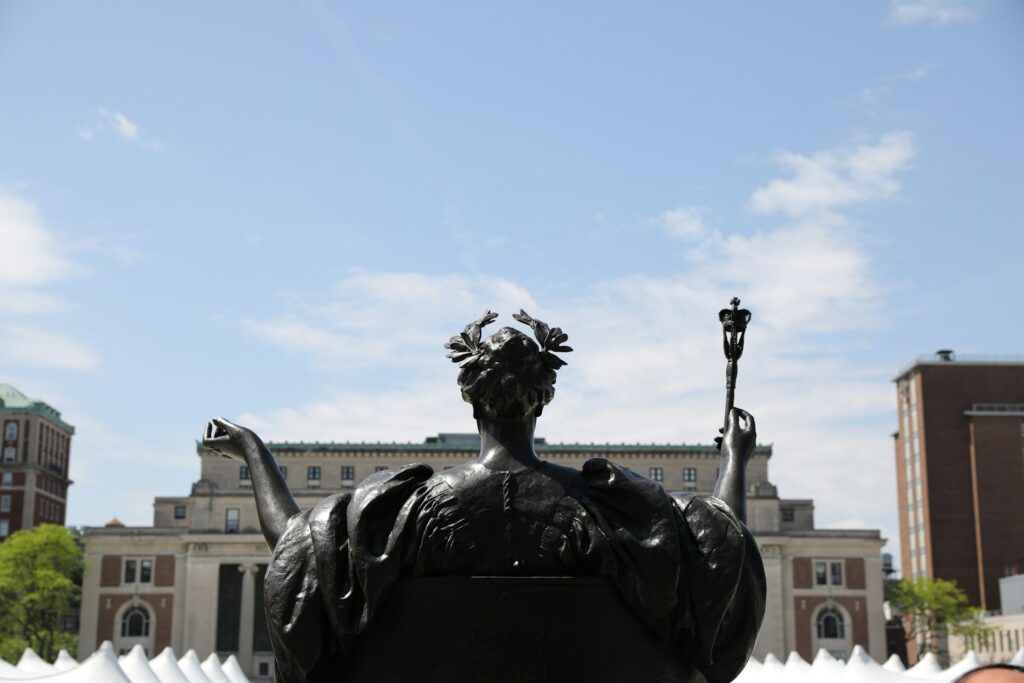
The choice between public vs private MSW programs in NY involves more than just personal preference. Your decision can substantially affect your finances as well as your career path and opportunities. A two-year MSW at a private university in New York costs $71,894 on average, while public institutions like SUNY charge about $29,553.
So what’s the difference? Typically, private programs can manage things like class sizes, have deeper discussions in class as a focus, and access to field placements through their alumni networks. However, in New York, apart from tuition, you’ll often have the same field placements no matter your school, however, schools like Lehman are harder to get into due to the application pool and sheer volume of people applying relative to available spots. If you are looking to get your career started quickly, you may put cost concerns as a lower priority if degree completion can come sooner at a private school.
We’ll take you through the tuition, the financial aid and scholarship options, the curriculum, program formats, how to get accepted and more as we help you weigh your options between public and private MSW options.
Tuition and Financial Aid: Public vs Private MSW Schools in NY
State Residency and Tuition Rates at Public Universities
Your residency status is what determines tuition rates at public universities in New York. CUNY MSW programs charge $7,315 per semester for full-time New York State residents, while out-of-state students pay $1,000 per credit. SUNY schools set MSW tuition at $6,540 per semester for residents and $11,105 for non-residents. The University at Buffalo, part of the SUNY system, charges $8,199.86 per semester for New York residents compared to $13,674.86 for out-of-state students.
Out-of-state students who move to New York and establish permanent residence can apply for the in-state rate for the remainder of their program. Most states require you to live and work in the state for at least one year. You’ll need to provide proof through a driver’s license, tax returns and voter registration. This adjustment can cut your total program cost nearly in half.
How Private Universities Structure MSW Tuition
Private institutions charge the same tuition whatever your residency status. Columbia University sets annual tuition at $57,973, while Syracuse charges $48,132 per year. These rates remain constant whether you’re a New York resident or come from another state. Private schools list tuition per credit hour, with most MSW programs requiring 60 credits to complete.
Federal Aid and Institutional Scholarships
Submit your FAFSA by March 1 to receive full consideration for federal aid at public universities. Columbia offers institutional scholarships ranging from $5,000 to $20,000 per year for full-time students who complete a valid FAFSA. NYU Silver School provides guaranteed scholarships of at least $21,000 total for City Year AmeriCorps members who completed one term of service. Scholarship recipients at Columbia see their aid renewed for their second year.
SUNY and CUNY System Cost Advantages
Hunter College emphasizes delivering quality education at half the cost of comparable private schools. Completing a 48-credit MSW at CUNY as a full-time resident costs around $29,260 in tuition alone, whereas private alternatives exceed $100,000 for the same credential. York College charges New York State residents $620 per credit for part-time enrollment, making it available for working professionals pursuing social work master’s programs NYC on a flexible schedule.
Program Structure and Learning Experience
Class Size and Faculty Access Differences
Private universities structure MSW programs around smaller cohorts and individual-specific faculty interaction. Public universities accommodate larger student populations with more formal advising systems. NYU Silver maintains a maximum of 25 students in most courses, with Practice I and II classes capped at 15 students. Public institutions may have several hundred students in a single cohort. This size difference affects how you access faculty outside scheduled class time and the depth of individualized academic guidance you receive.
Concentrations and Specialization Options
Private MSW schools often emphasize niche tracks such as trauma-informed care and advocacy. Public universities focus on core practice areas including clinical practice, community practice and policy that prepare students for broad employment pathways. Stony Brook offers three specializations: Community, Policy, and Political Social Action; Families, Youth, and Transition to Adulthood; and Integrated Health. You should choose concentrations based on career fit rather than novelty. A broad concentration provides flexibility across multiple social work roles.
Online MSW Format Flexibility
Binghamton University offers online MSW programs with asynchronous course formats. You can complete weekly modules at your own pace. Rutgers delivers asynchronous online classes with structured deadlines. You’re not required to attend fixed meeting times. Stony Brook’s online program operates synchronously via Zoom on specific days and times. Students must be on-camera and fully engaged. The format you select depends on whether you need maximum scheduling flexibility or prefer immediate interaction.
Advanced Standing Programs at Public and Private Schools
Fordham’s advanced standing track allows BSW holders to earn their MSW in nine months, saving over $30,000 in the process. Similarly, advanced standing programs at public universities like Rutgers require 39 credits compared to 60 credits for traditional tracks. University of the Pacific structures its advanced standing pathway at 32 credit hours with completion options of 12 months accelerated or 20 months extended.
Field Placement Support and Agency Networks
How Public Universities Connect Students to Community Agencies
Field education serves as the signature pedagogy for social work programs accredited by CSWE. Hunter College, Stony Brook University and other SUNY schools use partnerships with community-based organizations throughout New York. P2L provides mental health services to underserved communities and partners with Hunter College and Stony Brook University for MSW field placements. The Child Center of NY cooperates with more than 40 universities and colleges to recruit nearly 50 interns annually. These public institutions work with nonprofit agencies, hospitals and government departments that serve populations of all types.
Private University Field Placement Coordination
Private MSW schools maintain broader geographic networks. Columbia University’s Practicum Education Department connects students to approximately 900 placement sites nationwide, with more than 600 located in New York City, New Jersey and Connecticut. Fordham takes pride in its extensive agency partnerships in the tri-state area and offers thousands of placement options spanning mental health, school social work, aging services and immigration support. P2L also partners with private institutions including Columbia, Fordham, NYU and Adelphi.
Field Hour Requirements Across Program Types
CSWE mandates a minimum of 900 field hours for accredited MSW programs. Most students complete around 1,000 hours total across two placements. Advanced standing students face reduced requirements. Some schools require 600 total hours instead. Students complete their first 300 hours at one organization before moving to a different placement for remaining hours. Full-time students spend 20 hours per week in field settings, while part-time students commit 10-15 hours weekly.
Finding Placements for Social Work Master’s Programs NYC
Field coordinators retain final authority over placement decisions, not students. Programs place students within 50 miles of their residential address. You should begin searching early and use career centers, alumni networks and professional connections. Agencies expect 16-20 hours per week from students. Field instructors must hold an MSW from a CSWE-accredited institution with two years of post-degree experience.
Career Outcomes and Licensure Preparation
CSWE Accreditation at Public and Private Institutions
All MSW programs in New York State maintain CSWE accreditation to get graduates licensed, whether public or private. New York requires graduates from CSWE-accredited programs to sit for both LMSW and LCSW licensing examinations. This standardization means accreditation status doesn’t separate public vs private MSW NY options.
LMSW and LCSW Exam Pass Rates
NYU Silver School reports an 84% first-time LMSW pass rate compared to the 73% North American average. LCSW exam performance is 83% versus 75% nationally. Syracuse University achieves 85% pass rates for both LMSW and LCSW exams and exceeds the 78% average across all New York schools.
Starting Salaries for Public vs Private MSW Graduates
NYU’s Class of 2024 MSW graduates earned a mean starting salary of $69,162. This represents $23,278 more than BSW graduates. LCSWs in the United States average $83,600 annually, with top earners exceeding $100,000.
Employer Perceptions of MSW Schools
Hunter College graduates populate the workforce throughout New York City, with over 90% remaining in the metropolitan area. Hardly any organization or human service agency operates without Silberman-trained social workers.
Alumni Networks and Job Placement Support
Columbia maintains an alumni network exceeding 20,000 professionals, while NYU Silver counts 20,000+ alumni. Hunter emphasizes local reach and leads the city in producing group workers and community organizers.
Make your Choice
The public vs private decision comes down to the priorities you have for your MSW. Public universities offer substantial cost savings, especially for state residents, but they are harder to get into. Conversely, private schools provide smaller classes and extensive alumni networks, but they cost a lot more. Both pathways have CSWE accreditation and lead to New York licensure eligibility. The good news is you’re joining a profession with strong demand and meaningful work, whether you choose CUNY’s affordability or Columbia’s prestige.