
NYU vs Columbia MSW Programs
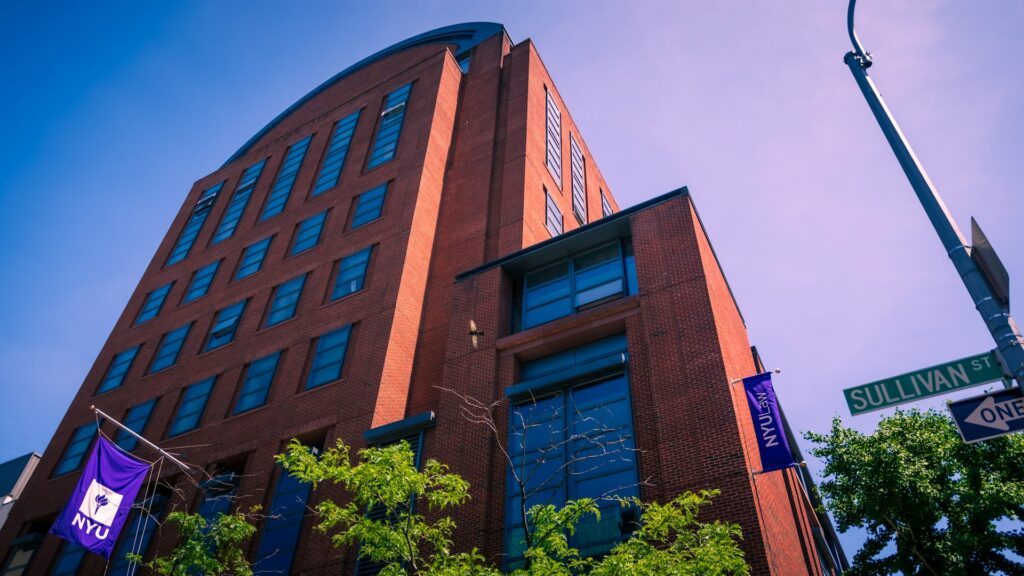
NYU’s and Columbia’s MSW Programs represent two of the most prestigious pathways into social work. Choosing between them requires you to think over your career goals and what’s important to you as a learner.
Columbia School of Social Work has been a leader in social work education since 1898. NYU Silver School offers its own distinct approach to preparing future social workers. Columbia ranks 13th nationally compared to NYU’s 30th position. Both schools provide rigorous training that combines academic theory with practical experience. The Columbia University and NYU programs vary in the way they set up their curriculum, what you can specialize in, field placements, and costs.
You’ll find these key differences are important as you evaluate NYC’s MSW programs. We break down the differences between these two programs and help you determine which one lines up best with your professional goals.
Note: These comparisons are based on our professional opinions as enrollment professionals, and are really to give you insight so you can best weigh your options.
Program Structure: Columbia University MSW vs NYU Silver School
Curriculum Requirements and Core Coursework
Both programs need 60 credits to complete the degree, but they distribute these credits differently. Columbia University MSW students complete 42 academic credits among 18 field education credits, which translate to 1,200 practicum hours. NYU Silver reduced its field learning requirement from 1,200 to 900 hours, the minimum set by the Council on Social Work Education. This change was implemented by fall 2024.
Columbia’s generalist year has foundational courses in social work practice methods, social work research and psychological and social theory. Students take Human Behavior and the Social Environment, Social Welfare Policy, Foundations of Social Work Practice and courses on direct practice and advocacy. NYU emphasizes a strong clinical focus without requiring students to choose a concentration or track. Your clinical training provides a foundation whether your interest lies in practice, policy or research.
Class Schedule: Full-Time vs Part-Time Options
Full-time students at both schools spend three days (21 hours) per week at practicum placements and two days in the classroom. You’ll take four classes at NYU, with some students condensing all courses into one day. Columbia’s Two-Year Program follows this same pattern and splits time between classroom learning and field experience.
Part-time pathways differ between the two institutions. Columbia’s Part-Time to Full-Time (Extended) Program allows you to take courses part-time during your first year without practicum enrollment. You transition to full-time status once practicum begins. NYU’s part-time students maintain 21 hours weekly at placements, though some opt for 15 hours per week and extend placements through summer.
Program Length and Completion Timeline
Standard full-time programs take two years to complete at both schools. Columbia offers a 16-Month Accelerated pathway that starts in January and needs four consecutive terms including summer. NYU provides a similar 16-Month Accelerated option with five consecutive semesters including an intensive summer term.
Part-time pathways need three to four years. NYU’s Advanced Standing pathway takes two semesters for graduates from CSWE-accredited BSW programs within the past five years.
Student-to-Faculty Ratio and Class Sizes
NYU maintains practice classes and required courses with 15-25 students, though some electives may be larger due to demand. Columbia reports a 6:1 student-to-faculty ratio at the university, with most courses meeting in small seminar-style formats.
Specializations and Concentration Areas
Columbia MSW Specialization Tracks
The approach to specializations is fundamentally different between these social work master’s programs NYC institutions offer. After you complete your generalist year at Columbia, you select one method specialization and one field of practice. This creates 28 possible combinations.
Columbia provides four method specializations. Advanced Clinical Practice (ACP) develops clinical skills through state-of-the-art approaches that focus on families, individuals and groups. The program incorporates trauma-informed care and systems thinking. Integrated Practice and Programming (IPP) spans individual and community levels and includes program planning, advocacy and evidence-based interventions. Policy Practice (POL) teaches policy analysis, advocacy and research. Courses in microeconomics and macroeconomics are part of this track. Leadership, Management, and Entrepreneurship for Social Justice (LME) prepares you to manage organizations and create new ventures that address social problems.
You pair your method with one of seven fields of practice. This guides your specialized year coursework.
NYU Silver School Concentration Options
NYU Silver takes a different path. All students complete a required specialization in clinical social work practice during the final year. NYU maintains a single specialization focused on clinical practice within a social justice viewpoint. Columbia’s multiple tracks stand in contrast to this approach.
Students boost their learning through electives that cover specific populations, theories and methods. Focused Learning Opportunities allow deeper expertise in school social work, child welfare, serious mental illness and substance use. Students gain this through targeted practicum placements and related seminars.
Clinical Social Work Focus Areas
Both Columbia University MSW and NYU programs emphasize clinical practice, though their structures are different. NYU’s specialized practice curriculum extends and deepens assessment, intervention and evaluation skills. It provides critical understanding of mental health and illness, including social, economic and political factors.
Community and Macro Practice Pathways
Macro practice opportunities appear more at Columbia through IPP, POL and LME specializations. NYU offers macro settings that include government organizations, universities, research institutions and nonprofit organizations. Students gain experience in social work research, program development, program evaluation, policy analysis and nonprofit administration.
Field Placement and Practical Experience
Field Education Requirements at Columbia
Columbia structures practicum requirements based on your chosen pathway. Students in the two-year and 16-month programs complete three days each week (21 hours) for 1,200 total hours across four terms at two different agencies. Part-time students attend two days each week (14 hours) over six terms and reach 1,200 hours. The One-Year Residency for Working Professionals requires 28 hours each week, totaling 900 practicum hours.
NYU’s Practicum Learning Structure
NYU Silver replaced the term “field” with “practicum” in 2023. This change reflects the former term’s historical associations with slavery and immigrant labor exploitation. The School merges practicum with Practice classes and assigns your Practice instructor as your practicum Faculty Advisor to provide support. Students in the generalist year focus on foundational practice skills. Those in the specialized practice year concentrate on specific aspects within their chosen area.
Agency Partnerships and Placement Locations
Columbia maintains partnerships with over 1,000 agencies in New York City, New Jersey, and Connecticut. An equal number of partnerships exist nationwide for online students. NYU connects students to more than 600 public and nonprofit agencies throughout the greater New York area and Shanghai. Both programs place students in settings of all types. These include hospitals, schools, substance use treatment centers and community health clinics.
Supervision and Support During Fieldwork
Practicum Instructors at Columbia oversee your training and assess skill development. They recommend pass/fail grades. Advisors from the Office of Advising monitor your progress throughout the year. NYU assigns Practicum Instructors and Task Supervisors who provide supervision meetings each week.
Integration of Classroom Theory with Field Practice
NYU describes practicum as the “open classroom” where you apply theories and knowledge with clients. Columbia emphasizes transformational learning that challenges you to merge classroom theory into practice while developing professional identity.
Admissions, Costs, and Financial Aid for Social Work Master’s Programs NYC
Acceptance Rates and GPA Requirements
Columbia’s acceptance rate stands at 74%, while NYU received 1,550 applications with 1,275 acceptances. Both schools assess applications in a holistic manner rather than relying on undergraduate GPA alone. Columbia requires a bachelor’s degree from an accredited institution and an academic record suggesting graduate-level capability. NYU looks for strong academic records showing intellectual capacity, writing skills and commitment to social work values. Neither Columbia University MSW nor NYU programs require GRE scores.
Tuition Costs: Columbia vs NYU MSW Programs
Columbia charges $1,834 per credit. NYU’s tuition reaches $60,000 each year. Application fees differ: Columbia charges $75 compared to NYU’s $60.
Financial Aid and Scholarship Opportunities
More than 90% of Columbia students filing eligible FAFSA applications receive institutional aid. Scholarships range from $5,000 to $20,000. NYU reports that over 95% of eligible students receive scholarship funding, with awards ranging from $7,000 to $17,000 per academic year for full-time students.
Application Deadlines and Requirements
Columbia’s fall priority deadline falls on December 1st, with subsequent deadlines February 15th and June 1st. NYU requires three recommendation letters and transcripts from institutions where you earned 12 or more credits.
Make Your Choice
Both programs prepare you well for social work careers, but your choice depends on your professional direction. Columbia offers more flexibility if you’re interested in macro practice, policy or leadership roles through its multiple specialization tracks. NYU suits you better if clinical practice is your main goal and you prefer a focused curriculum. The practicum hours requirement and agency partnership networks are also worth thinking about when you make your decision. Either way, you’ll receive excellent training from top-tier institutions.